10 German Surnames on the Verge of Extinction

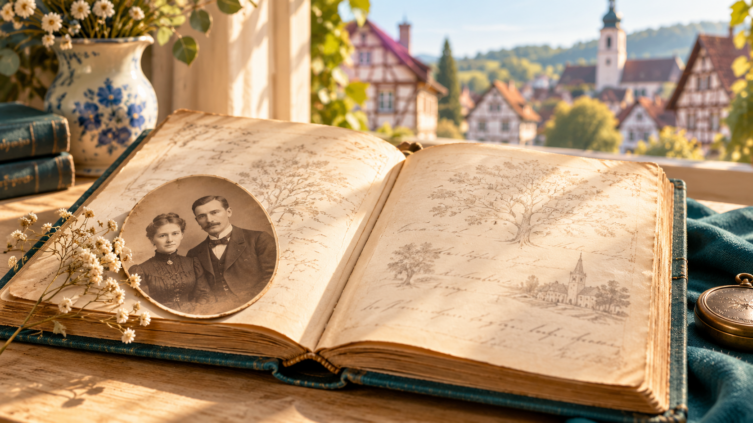
Germany has an exceptionally wide variety of family names (Familiennamen), with approximately one million distinct surnames. Some date back to the 12th century, and their origins can tell us about family histories, occupations, geographical features, physical and personality traits, and regional dialects.
However, according to research by MyHeritage, this diversity is under threat. While common surnames such as Müller, Schmidt, and Weber are carried by large numbers of people, many rare German surnames are on the verge of extinction.

Müller has been Germany’s most common surname for years, with more than 256,000 bearers. Schmidt ranks second, with more than 190,000. When related variants with different spellings or pronunciations are included, the number exceeds 300,000. These variants include Schmitt, ranked 26th in Germany with approximately 40,000 bearers; Schmitz, ranked 29th with nearly 39,000; and Schmid, ranked 32nd with more than 35,000.
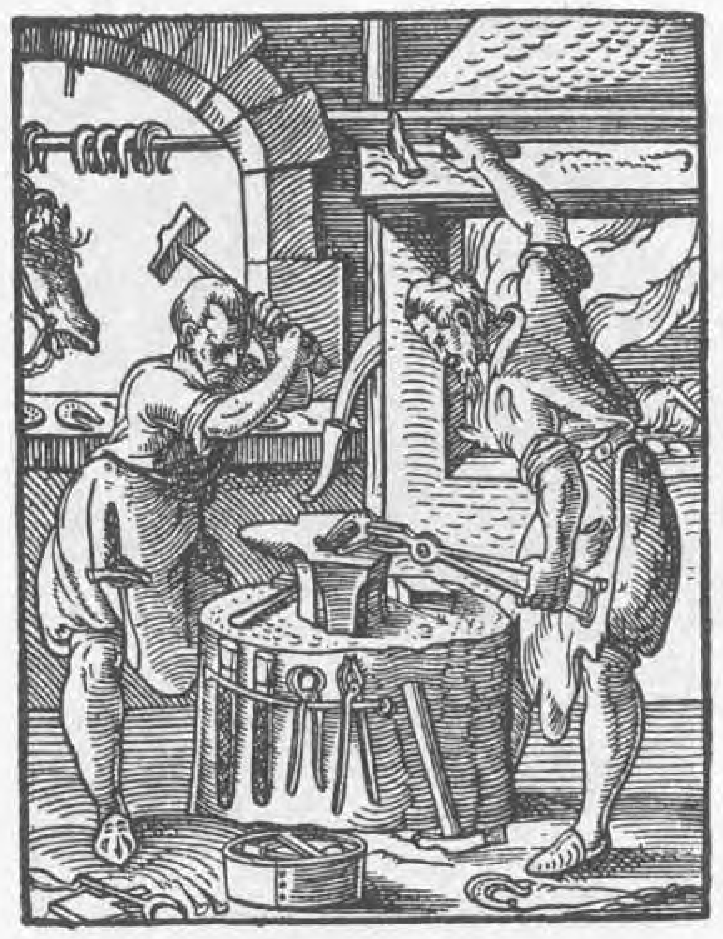
Illustration of a blacksmith at work from Eigentliche Beschreibung aller Stände auf Erden, published 1568 in Germany
At the other end of the scale, dozens of surnames are at risk of disappearing from Germany. Some are carried by just one or two people.
The MyHeritage Research team studied the origins and distribution of German surnames to identify some of the rarest names in the country, including related variants with different spellings or pronunciations. Here are 10 examples.
Wollseif
Recent data shows only one person in Germany with the surname Wollseif.
The variant Wollseiffen has 19 bearers, while the more common Wollseifen is still extremely rare, with fewer than 50.
The surname originated in medieval Germany and likely referred to people involved in the wool or soap-making trades. It combines the words for “wool” (Wolle) and “soap” (Seif).
Aalfeld
Only two people in Germany are documented with the surname Aalfeld. Related variants include Alfeldt (9 bearers) and Alfeld (17 bearers).
The surname comes from a place name, such as Alfeld in the Hildesheim district of Lower Saxony or Ahlefeld, part of Ahlefeld-Bistensee in the Rendsburg-Eckernförde district of Schleswig-Holstein.
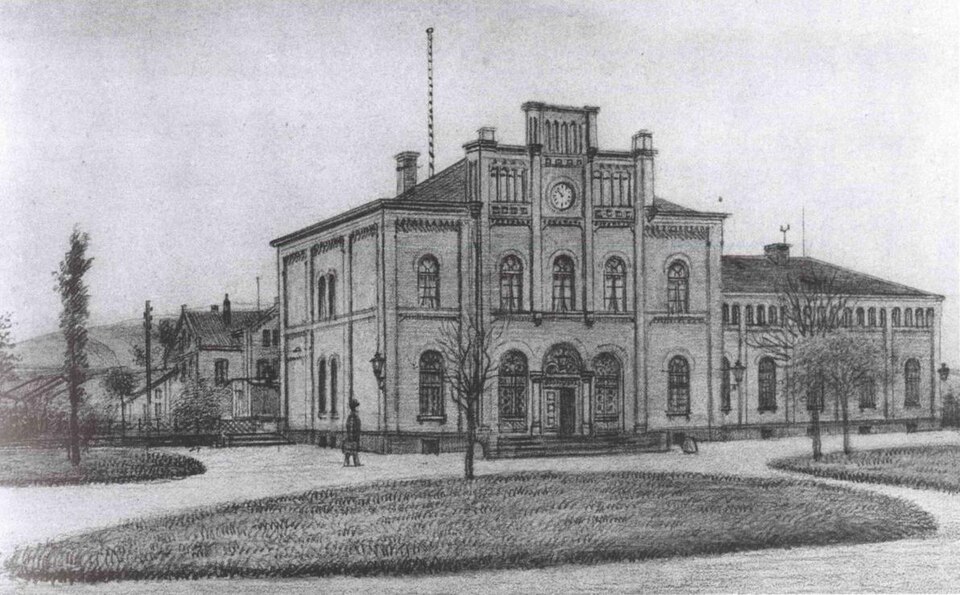
Anonymous drawing of the Alfeld an der Leine train station circa 1900
Abatzidou
Only one person in Germany is documented with the surname Abatzidou.
Related variants include Abatzidis (8 bearers) and Abatzis (16 bearers).
The surname Abatzis dates back to the Byzantine era and comes from a Greek term meaning “servant” or “attendant.” It was historically associated with service to the nobility and skilled trades. The name spread to other parts of Europe and the Americas during the 19th and 20th centuries as Greek migrants sought better opportunities abroad.
Bachbaur
Only one person in Germany is currently documented with the surname Bachbaur. Its main variant, Bachbauer, has 23 bearers.
The surname originated in medieval Bavaria and described people who lived near streams. It combines the Middle High German words for “stream” (Bach) and “farmer” or “builder” (Baur). This reflects the importance of waterways to early settlements. The name has survived centuries of regional change, preserving its connections to farming and craftsmanship.
Haberts
Recent data shows only one person in Germany with the surname Haberts.
Related variants include Habbert (6 bearers), Habert (31 bearers), and Habbers (2 bearers).
The surname Habert can be traced to the ancient Germanic name Hadebert, which combines had (“battle”) and berht (“fame”). The name has medieval roots in what is now Germany and France, where bearers served in feudal administration and land management. Like many surnames, it likely also reflected a family’s identity or social standing within its community.
Ibertsberger
Only one person in Germany is documented with the surname Ibertsberger. Its variant, Ibetsberger, is almost as rare, with just 2 bearers.
The surname comes from the Alpine regions of southern Germany and Austria and likely referred to people from places such as Ibertsberg. The Middle High German suffix -berger means “mountain dweller,” suggesting that the name described families living near prominent geographical features. Over time, it also became associated with the region’s farming and craft traditions.
Zumbühl
Only 10 people in Germany are documented with the surname Zumbühl.
Related variants include Zumbiehl (3 bearers) and Zumbiel (23 bearers).
The surname originated in the Alpine regions of Central Europe and likely described people who lived near a particular landmark. It combines the Middle High German words zum (“to the”) and Bühl (“hill”), suggesting that it referred to families living near a hill. Over time, the name became associated with the region’s farming and pastoral traditions.
Wahnschap
Only 3 people in Germany are documented with the surname Wahnschap. Related variants include Wanschap (3 bearers), Wannschap (3 bearers), and Wahnschaap (21 bearers).
The surname originated in medieval Germany and likely referred to a family’s location or occupation. Different regional spellings developed over time, particularly during periods of migration in the 19th century.
Abbuhl
Only 11 people in Germany are currently documented with the surname Abbuhl.
The name originated in German-speaking Switzerland and likely comes from the biblical name Abel, meaning “breath” or “vapor.” Like many Swiss surnames, it also followed naming traditions associated with occupations, farming, and land ownership. Although variations of the name exist across German-speaking regions, it remains exceptionally rare today.
Abbetmeier
Recent records show only 9 people in Germany with the surname Abbetmeier. Its main variant, Abbetmeyer, has 12 bearers.
The surname originated in medieval German-speaking regions and likely referred to an occupation. It combines the name Abbet with meyer, a Middle High German term for “steward.” Surnames of this kind became hereditary between the 12th and 15th centuries and often reflected a family’s role in agricultural administration. They also indicated a family’s social and professional standing.
Below is a death record for Ms. Agathe Abbetmeyer from the German civil death register (Sterberegister) in Hückeswagen, North Rhine-Westphalia, dated April 14, 1925. The record was analyzed using MyHeritage’s Scribe AI tool:
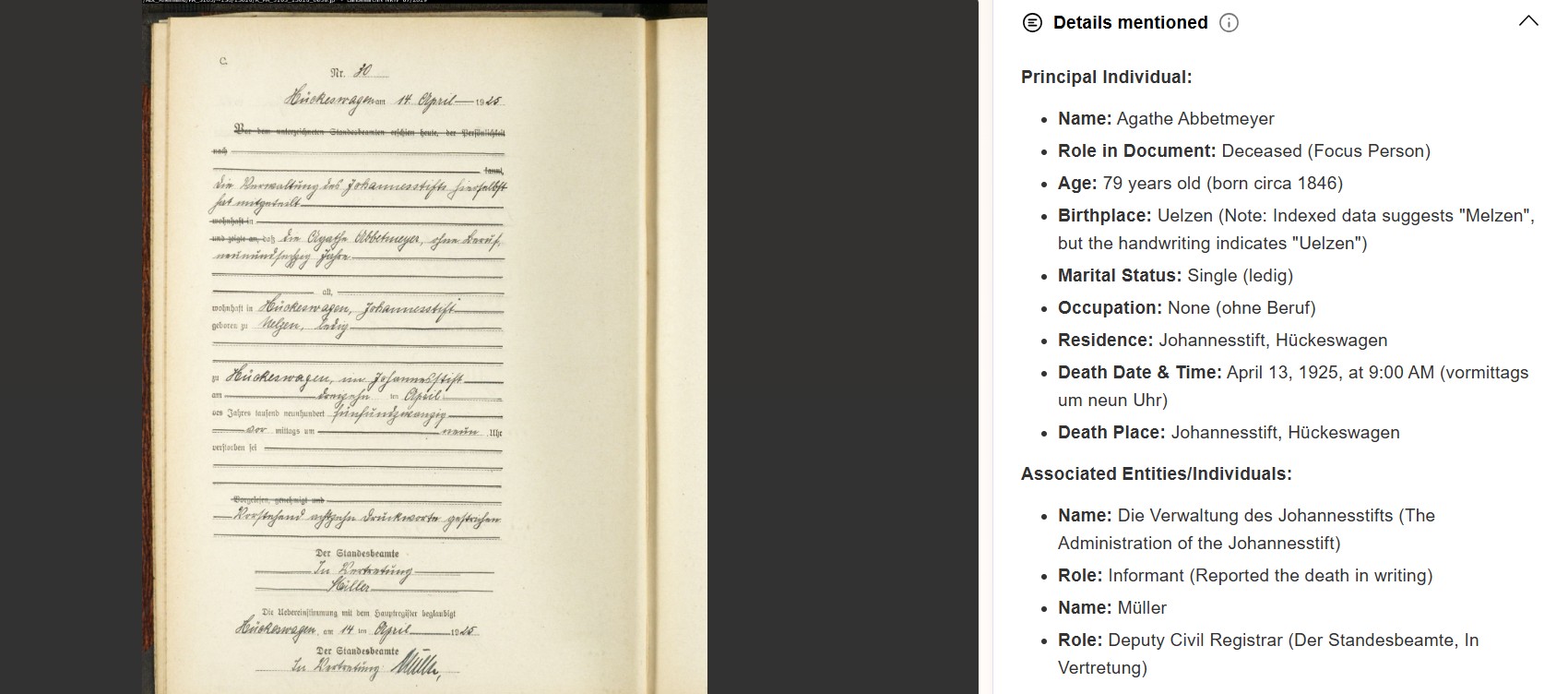
Civil death register of a person with the rare surname Abbetmeyer, with a Scribe AI analysis and translation
Every surname carries a piece of history, and even the rarest names can reveal clues about the people and places they came from. While some German surnames may be disappearing, the stories behind them can still be preserved through historical records and family research.
Curious about the history of your own surname? Explore billions of historical records on MyHeritage to discover where your family name came from and trace the generations who carried it before you.