The Monkland and Kirkintilloch Railway at 200: Tracing Scotland’s Industrial Families

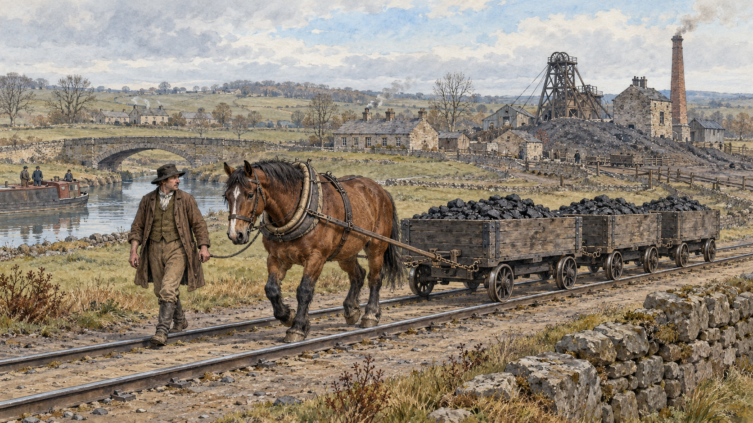
In 2026, the Monkland and Kirkintilloch Railway marks its 200th anniversary. Opened in Scotland in 1826 to carry coal from the Monklands to the Forth and Clyde Canal at Kirkintilloch, this pioneering railway helped lay the foundations for an expanding industrial transport network.
If you have ancestors from this part of Scotland, that history may help explain how your family’s addresses and occupations changed across generations. Why did your ancestors leave a rural parish for a mining town? How did the children of farm laborers come to work in ironworks or on the railways? The railway’s bicentenary offers an opportunity to explore the industrial changes that shaped your family’s lives, and the historical records that can help you trace them.

Key takeaways about the Monkland and Kirkintilloch Railway
- The railway opened in 1826, initially using horses. Steam locomotives followed in 1831.
- Its significance for family history extends to mining, ironworking, construction, and the communities supported by those industries.
- Census records can help trace changing occupations, household members, and places of birth and residence.
- MyHeritage’s Scottish census collections cover 1841–1901. Original census images and specialist archives can help you investigate further.
A railway built for coal
The Monkland and Kirkintilloch Railway carried coal along a route of about 10 miles to the canal, where cargo could continue by water. It illustrates a transition toward industrial rail transport that initially connected with existing waterways.
While October 1826 is traditionally cited as the opening month, contemporary newspapers show coal trains running on part of the route in May. North Lanarkshire’s museums note that these earlier journeys may have been trial runs.

An article in the Caledonian Mercury, published in Edinburgh on May 29, 1826, describes a trial run on the railway
Initially operated by horses, the railway’s stronger, malleable iron rails were able to support the steam locomotives introduced in 1831.
For family historians, the important question is what this expanding industrial economy meant for the people who lived nearby.
Following work into industrial communities
Coal mines, ironworks, and expanding transport networks needed workers. North Lanarkshire’s museum service describes skilled workers arriving from England and Wales, followed by Irish laborers. Later, famine drove people from Ireland and the Scottish Highlands to seek work elsewhere, including Scotland’s Central Belt. By 1851, 35.8% of Coatbridge’s population was Irish-born.
These movements give researchers useful context, but each family needs its own evidence. If a Scottish census lists your ancestor’s birthplace as Ireland, you can look for records of an earlier home there. Compare the birthplaces of siblings to narrow down when the family moved, and check occupations across census years. If you find that an ancestor went from agricultural work to industrial employment, you may have a clue to what prompted the move.
The museum service records one example: brothers John and Hugh Tumilty, farm laborers from Banbridge in County Down, came to Coatbridge in the 1880s. John became a sawyer at the Summerlee Iron Company. Their experience shows why searching under only one occupation can leave part of a life unexplored.
Start with the Scottish census on MyHeritage
MyHeritage offers seven Scottish census collections, covering 1841, 1851, 1861, 1871, 1881, 1891, and 1901. These contain about 24 million historical records. Depending on the year, entries can identify occupations, residences, birthplaces, and relationships within a household.
Begin with the Scottish census collections, then compare the same family across successive censuses. Record:
- Each person’s occupation, preserving the wording in the record.
- The address and parish of residence.
- Birthplaces, particularly those of children born between censuses.
- Other household members, including relatives, visitors, and boarders.
The 1851 Scotland Census is especially useful for tracing movement: Scottish returns from 1851 generally give a parish and county of birth for people born in Scotland, while 1841 usually indicates only whether a person was born in the county, or elsewhere.
MyHeritage provides transcripts of these Scottish censuses. Consult the original images through Scotland’s People when you need to check handwriting, resolve a transcription question, or examine the surrounding entries. The MyHeritage Wiki guide to census records in Scotland explains differences between census years and offers search tips.
Bridge the gap back to 1826
The 1841 census was taken 15 years after the railway opened. It can identify people who lived through its early years, but it cannot establish where a family lived in 1826.
To work back, combine census findings with church registers of baptisms, marriages, and burials. Statutory registration of births, marriages, and deaths began in Scotland in 1855; earlier research often depends on surviving church records. Search the relevant denomination as well as the parish.
Use children’s baptism entries to investigate earlier residences, and compare names and relationships across records before linking households. If a family disappears from one parish, widen the search to nearby industrial communities and places connected to known relatives.
Investigate railway employment carefully
If you find that one of your ancestors was described as a railway porter or engine driver, try investigating railway employment records. A coal miner or ironworker may have depended on the same industrial economy while working for a different employer.
The National Records of Scotland railway records guide identifies surviving staff registers and other sources. For example, it lists North British Railway staff registers for 1844–1948 under reference BR/NBR/15/1–94. These are a potential source when the employer and period fit, rather than a complete list of workers on the Monkland and Kirkintilloch line.
Before contacting an archive, gather an ancestor’s full name, approximate working dates, occupation, and addresses. Check which company operated the relevant line at that time and ask what survives. Company records, photographs, and timetables may also illuminate a workplace even when an individual staff entry cannot be found.
Put a family’s address on the map
An address becomes more informative when you can see the surrounding streets, pits, ironworks, canals, and railway lines. The National Library of Scotland’s historical maps let you investigate that geography and compare maps from different periods.
Locate an address from a census or certificate, then look for nearby workplaces and transport links. Check the map’s date: a colliery shown decades after an ancestor lived nearby may not have existed during that person’s lifetime.
Proximity is a clue for further research. Living beside a railway does not establish employment with it, and a nearby station does not prove how a family traveled.
Bring the evidence together
Choose one household in your family tree and build a timeline of its addresses, occupations, and children’s birthplaces. Add source references as you search historical records, and distinguish documented events from possible explanations.
The railway’s bicentenary can prompt a productive question about that timeline: what was changing around this family? Following up on a single occupation or unfamiliar place-name may help explain how a family became part of Scotland’s industrial communities.
FAQs about the Monkland and Kirkintilloch Railway
When did the Monkland and Kirkintilloch Railway open?
It opened in 1826. October is traditionally cited, although contemporary reports document coal trains on part of the route in May.
Was it a steam railway from the beginning?
It initially used horse traction. Steam locomotives were introduced in 1831.
Can I find its employees on MyHeritage?
Scottish census transcripts on MyHeritage may identify ancestors with railway occupations, but an occupation alone does not establish the employer. Use archival staff records and other evidence to investigate a connection to this particular railway.
Where should I begin if my ancestor worked in mining or ironworking?
Find the household in the census, note occupations and addresses, and compare earlier and later returns. Historical maps and local archives can then help identify possible workplaces to investigate.
Sources
- NorthLan Museums: The Monkland & Kirkintilloch Railway
- East Dunbartonshire Council: Bicentenary commemorative plaque and railway history
- NorthLan Museums: Migration from Ireland to North Lanarkshire
- Scotland’s People: Census returns guide
- National Library of Scotland: Births, deaths and marriages
- National Records of Scotland: Railway records for local, family and social history
- National Library of Scotland: Maps and family history
Yan Sandler is a passionate genealogy enthusiast, specializing in Eastern European and Jewish heritage. He enjoys helping others to uncover their roots, turning complex archival fragments into meaningful family stories for researchers worldwide.