How the Tangshan Earthquake Reshaped Family Histories and Migration

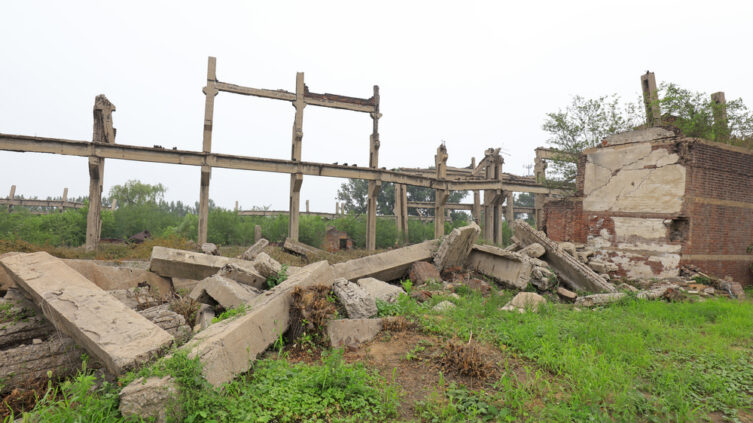
In the pre-dawn hours of July 28, 1976, a catastrophic magnitude 7.5 earthquake struck the industrial city of Tangshan in Hebei Province, China. In just 23 seconds, an entire city was flattened. It remains one of the deadliest natural disasters in human history, officially claiming 242,419 lives, though unofficial estimates climb much higher.

While the physical devastation and staggering loss of life are well-documented, the disaster also triggered a massive, state-led demographic upheaval. For genealogists and family historians, the Tangshan earthquake represents a profound rupture, a moment where thousands of family trees were abruptly severed, scattered, and permanently rewritten through intense migration waves.
Key takeaways about the Tangshan earthquake
- The 1976 magnitude 7.5 Tangshan earthquake was one of history’s deadliest disasters, obliterating a vital city and instantly shattering centuries of family lineages, documentation, and ancestral records across northern China.
- Unprecedented outward evacuations of injured survivors and thousands of “Tangshan Orphans,” paired with an inward influx of state-led military and reconstruction workers, permanently redrew the region’s genetic and demographic map.
- Strict Chinese domestic policies in 1976 forced earthquake displacement inward, blocking international migration to the West until political reforms and normalized diplomatic ties gradually opened outward paths starting in 1978.
The outward migration: the “Tangshan Orphans” and evacuations
In the immediate aftermath, Tangshan was a zone of total ruin. With infrastructure obliterated and disease a pressing threat, the Chinese government orchestrated an unprecedented evacuation effort. An estimated 100,000 injured citizens were transported via planes, trains, and medical convoys to hospitals in eleven neighboring provinces, including Henan, Shaanxi, and Jiangsu. While many eventually returned, a significant number permanently resettled in their host communities, establishing new family branches far from their ancestral homes.
Even more poignant was the fate of the Tangshan Orphans. The disaster left 4,200 children without parents. To cope with the crisis, the state established specialized orphanages, but thousands of children were also sent across the country for adoption. Families in provinces like Shandong, Henan, and Anhui opened their homes to these children.
- Identity obstacles: Many adopted children were given entirely new names, effectively obscuring their original family lineages.
- Genealogical disconnect: Decades later, these individuals, now older adults, frequently face immense challenges tracing their biological heritage, creating a unique genealogical puzzle for their descendants.
The inward migration: rebuilding a city from ash
Migration wasn’t just outward; to rebuild Tangshan, the state mobilized a massive counter-wave of inward migration. A force of 100,000 soldiers of the People’s Liberation Army (PLA), alongside tens of thousands of construction workers, engineers, and medical professionals from all over China, flooded into the disaster zone.
This state-led resettlement effort permanently altered Tangshan’s demographic profile. A significant portion of the relief workers stayed, married locals, and raised families in the newly rebuilt city. Consequently, the family histories of modern-day Tangshan residents are incredibly diverse, often tracing back to ancestral roots in distant provinces like Zhejiang, Sichuan, or Guangdong rather than Hebei.
The broken thread: impact on genealogical records
For those trying to piece together their family tree, the 1976 earthquake presents severe roadblocks to accessing vital historical records. Traditional Chinese genealogy relies heavily on two elements: Jiapu (printed clan family books) and Hukou (household registration records).
The earthquake destroyed countless ancestral shrines and private homes, obliterating centuries-old jiapu that documented generational lineages. Simultaneously, municipal archives and local police stations were reduced to rubble, destroying official hukou documents.
Because of this destruction, standard paper-trail research for families originating in Tangshan is incredibly difficult. Lineages that could once be traced back to the Ming or Qing dynasties vanished overnight.
Modern healing: piecing the past together
Today, the descendants of the Tangshan earthquake survivors are turning to modern methods to bridge the gaps in their family histories. In recent decades, grassroots movements and digital platforms have emerged to help survivors and displaced orphans reconnect with their roots.
- DNA databases: Taking a MyHeritage DNA test has become a vital resource for the aging “Tangshan Orphans” looking to find surviving biological siblings or extended cousins.
- Digital memorials: Online forums and the massive Tangshan Earthquake Memorial Wall (inscribed with the names of the victims) serve as crowd-sourced genealogical registries, helping families verify dates of death and missing connections.
The blocked path to the West
While seismic disasters in other parts of the world often triggered immediate international flights, survivors of the Tangshan earthquake faced a completely different geopolitical reality. In 1976, strict national policies tightly prohibited migration to the United States or Europe, keeping the demographic impact entirely internal. Mainland Chinese migration to the West didn’t begin to open up until a few years later. This catalyst was not a natural disaster, but rather landmark political changes:
- 1978 “Opening Up” Policy: Under Deng Xiaoping, China began economic reforms that gradually relaxed restrictions on citizens leaving the country.
- 1979 Normalization of Relations: The formal establishment of diplomatic ties between the U.S. and the People’s Republic of China paved the way for legal immigration pathways, primarily through student visas and family reunifications.
A global pattern of seismic displacement
Because of these tight political borders in 1976, the families affected by the Tangshan tragedy had to rebuild entirely within China. However, looking at global history reveals a much different pattern when borders are open.
Seismic disasters have frequently driven massive international migration waves, forcing families to cross oceans to seek safety. To see how other powerful tremors completely reshaped the lineages of thousands of families across the globe, read about these 7 earthquakes that shaped immigration to the United States.
Resilience amid rupture: the enduring legacy of Tangshan’s families
The Tangshan earthquake was not just a tragedy of bricks and mortar; it was a profound disruption to the human tapestry of northern China. The resulting migration waves scattered bloodlines across the nation and brought new ones in to rebuild. For family historians, studying Tangshan requires looking past the tragedy to see the incredible resilience of families who, despite losing their records and their homes, continue to seek out the threads that bind them to the past.
FAQs about the Tangshan earthquake
When did the Tangshan earthquake occur and what was its magnitude?
The catastrophic Tangshan earthquake occurred in the early morning hours of July 28, 1976. It registered a devastating magnitude of 7.5, flattening the entire industrial city in mere seconds.
How many people died in the Tangshan earthquake?
Officially, the Chinese government reported 242,419 casualties. However, due to the density of the targeted urban area and destroyed records, unofficial estimates suggest the actual death toll was significantly higher.
What were the “Tangshan Orphans”?
These were 4,200 children left parentless by the disaster. Many were placed in state orphanages or adopted by families across various provinces, often receiving entirely new names.
Why is it difficult to trace family histories from Tangshan?
The earthquake completely destroyed municipal archives and private homes. This obliterated official household registration records (Hukou) and ancestral clan books (Jiapu), breaking generational paper trails for family historians.
Did survivors migrate to the United States or Europe immediately after the quake?
No. Strict national policies prohibited international migration in 1976. Displacement remained entirely internal until economic reforms in 1978 and normalized diplomatic relations in 1979 gradually opened paths to the West.
Yan Sandler is a passionate genealogy enthusiast, specializing in Eastern European and Jewish heritage. He enjoys helping others to uncover their roots, turning complex archival fragments into meaningful family stories for researchers worldwide.