The Great Famine of 1876–1878: What It Could Mean for Your Family History

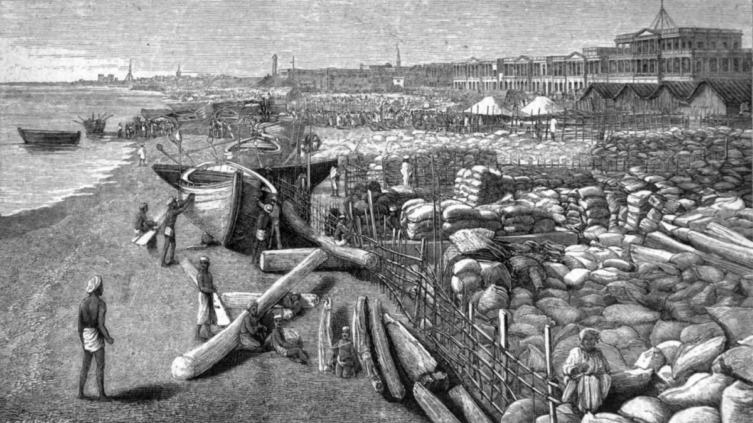
One hundred and fifty years ago, a failed monsoon helped set in motion one of the deadliest subsistence crises of the 19th century. The Great Famine of 1876–1878 devastated large parts of southern and western India, including the Madras and Bombay presidencies and the princely states of Mysore and Hyderabad. As the crisis spread during 1877, it also affected parts of central and northern India.

The drought was part of a much wider climate disaster. Modern research has connected the severe droughts of 1875–1878 across Asia, Africa, and South America with an exceptional combination of ocean and atmospheric conditions, including a powerful El Niño. In India, crop failures were compounded by soaring food prices, poverty, colonial economic policies, and inadequate relief. Estimates of the number of deaths vary considerably, but they run into the millions.
For family historians, the 150th anniversary offers a reason to look beyond the enormous statistics and consider how the famine may have reshaped individual families. An ancestor may have died without leaving an accessible death record, moved in search of food or work, entered a relief camp, changed occupations, or become separated from relatives. Even when the famine is never mentioned in surviving family accounts, its effects may be visible in the records left behind.
Key takeaways about the Great Famine of 1876–1878
- The Great Famine began in southern India in 1876 and continued into 1878, affecting tens of millions of people across a vast area.
- Drought and crop failure triggered the crisis, while economic conditions, colonial policy, high food prices, and limited relief greatly increased its human cost.
- In family history research, the famine may help explain deaths, disappearances, migration, disrupted households, debt, land loss, and changes in occupation.
- A gap or sudden change in the records is a clue, not proof. Compare several sources before connecting a family event to the famine.
- Useful sources may include civil and religious records, census reports, land and revenue files, relief records, newspapers, migration records, and oral history.
What was the Great Famine of 1876–1878?
The famine began after poor rainfall and crop failure in the Deccan Plateau and southern India in 1876. The worst-affected regions included much of present-day Tamil Nadu and Karnataka, as well as parts of Andhra Pradesh, Telangana, and Maharashtra. Contemporary administrative geography was different from today’s map, so researchers may encounter place names such as Madras Presidency, Bombay Presidency, Mysore State, and Hyderabad State.
By 1877, the crisis had extended into additional areas. Food prices rose beyond the reach of many families, livestock died, and rural livelihoods collapsed. People sold possessions, incurred debt, left their villages, or sought assistance at relief works and camps. Malnutrition also made the population more vulnerable to disease. Mortality continued even as rainfall and harvest conditions began to improve, with epidemics taking many lives among people already weakened by hunger.
The precise death toll remains uncertain. Historical estimates depend on incomplete registration, administrative reports, and comparisons of population totals before and after the famine. For genealogists, that uncertainty is itself important: millions of individual deaths cannot be expected to appear neatly in a single set of death registers.
Why the famine can matter in genealogy research
Large historical events often enter a family history indirectly. A record may state that a person died, relocated, remarried, or took a different job without explaining why. Placing that event within the conditions of 1876–1878 can suggest new questions and new places to search.
Deaths and missing family members
If several relatives disappear from the record during the late 1870s, famine-related mortality is one possible explanation. Death might have resulted from starvation, but diseases associated with displacement and severe malnutrition were also major threats.
Exercise caution when interpreting an absence. A person who no longer appears locally may have migrated, been recorded under a different spelling, joined another household, or simply been omitted from surviving records. Treat the famine as historical context until another source strengthens the connection.
Migration and family separation
People moved toward towns, relief centers, railway projects, and regions where food or employment seemed more accessible. Some returned home after the crisis; others settled elsewhere. In the longer term, economic hardship also contributed to labor migration from southern India to other parts of the British Empire.
For a researcher, this means that a relative who disappears from village records may surface in a city, port, plantation colony, or employment record. Search outward from the last known residence rather than assuming the entire family tree remained in one district.
Changes in land, property, and occupation
Famine could force cultivators to sell land, mortgage property, dispose of livestock, or abandon an agricultural livelihood. Artisans and weavers were also vulnerable when customers could no longer afford their goods. An ancestor described as a cultivator before the famine and a laborer, railway worker, or urban tradesperson afterward may have adapted to economic upheaval.
Land and revenue records can therefore add valuable context. They may document arrears, transfers, tenancy, petitions, or changes in ownership that do not appear in birth, marriage, and death records.
Remarriage, adoption, and reconfigured households
High mortality and displacement could leave widowed spouses, orphaned children, and families divided across different locations. Children might be taken in by relatives or other households without a formal adoption record. A widowed person might remarry, and later documents may not make the earlier marriage obvious.
Pay attention to guardians, witnesses, neighbors, and other people named in a record. These members of the wider family and community network may reveal how a household changed after the crisis.
How to investigate a possible family connection
1. Begin with a precise place
Identify the village, town, district, princely state, or presidency associated with the family in the 1870s. Because borders and place names have changed, record both the historical jurisdiction and its present-day equivalent. Gazetteers, old maps, and the famine maps preserved in the India Office Records can help establish whether the locality lay within an affected area.
2. Build a timeline from before and after the famine
List every known event for the family between roughly 1871 and 1881. Include births, marriages, deaths, residences, occupations, property transactions, military service, and migration. A broader window makes it easier to see gradual changes as well as abrupt breaks.
The 1871 and 1881 censuses are especially valuable at the population level, although surviving material and the amount of personal information available vary. Census reports can show how a district’s population, occupations, and settlement patterns changed even when household schedules do not survive.
3. Search vital and religious records
Birth, baptism, marriage, death, and burial records can establish relationships and narrow the dates when a person was last known to be alive. MyHeritage includes searchable historical records for India births and baptisms, 1786–1947, India marriages, 1792–1948, and India deaths and burials, 1719–1948.
Coverage is incomplete and varies by place and community. The ecclesiastical returns in the British Library’s India Office Records, for example, relate mainly to European and Eurasian Christians, with relatively few local converts included. For other families, local religious institutions, community records, village accounts, and regional archives may be more relevant.
4. Look for records created by the crisis
The famine generated administrative correspondence, maps, reports, relief accounts, public-works files, and later official investigations. These records may not always name every person receiving aid, but they can identify relief sites, migration routes, local conditions, and the dates when particular districts were most severely affected.
The National Archives of India preserves central government records, and its Abhilekh Patal portal provides searchable reference information for archival holdings. The British Library’s India Office Records include official papers from the administration of British India. Their catalogue descriptions are also searchable through The National Archives’ Discovery service, including a map of the areas affected by the famine of 1876–1878.
5. Follow migration beyond India
If family tradition points to migration after the famine, search passenger lists, indenture registers, plantation records, civil registrations, and return-migration documents in the destination country. Useful locations may include Ceylon, Burma, Malaya, Mauritius, South Africa, Fiji, and the Caribbean, depending on the family’s region, community, and date of migration.
Do not assume that every late-19th-century migration was caused by the famine. Economic pressure, recruitment networks, military service, marriage, and other factors may have played a role. The strongest case will combine timing, place, family testimony, and documentary evidence.
6. Preserve oral history and local memory
Family memories may survive without the dates historians expect. Stories of an ancestor who left during a time of hunger, lost land, traveled to find work, or was raised by relatives may refer to the Great Famine or to another regional scarcity. Record the account as it was told, including local terms, place names, relationships, and foods or occupations mentioned. Then compare those details with the historical timeline.
Oral tradition should not be dismissed simply because it cannot immediately be documented. It can point toward records that would otherwise be overlooked. At the same time, avoid assigning a story to the famine solely because the approximate period seems to fit.
Reading silence in the historical record
Researching families affected by famine involves working with absence. Many people who endured or died during the crisis left no record that is searchable by name today. Surviving colonial sources often describe populations through statistics, revenue, labor, and relief administration rather than preserving individual voices.
This makes careful reconstruction especially important. A district report can establish local conditions. A land file can show that a household lost property. A marriage record can reveal that a widow began a new household. A migration record can show where a surviving relative went. No single document may tell the whole account, but several independent sources can recover part of what happened.
The anniversary is also an invitation to approach this history with humility. Genealogy can restore names and relationships to a catastrophe usually expressed in millions, while acknowledging that gaps in the evidence may never be fully resolved.
Frequently asked questions about the Great Famine of 1876–1878
When did the Great Famine of 1876–1878 begin?
The famine began in southern India in 1876 after failed rains and crop losses, intensified during 1877, and continued into 1878. Its 150th anniversary therefore spans 2026–2028 rather than falling on a single date.
Which parts of India were affected?
The crisis severely affected the Madras and Bombay presidencies and the princely states of Mysore and Hyderabad. It later extended into parts of the Central Provinces, the North-Western Provinces, and Punjab. Historical jurisdictions do not align exactly with current state boundaries.
How many people died in the Great Famine?
Estimates vary because death registration and population data were incomplete. Scholarly estimates run into several million, and a frequently cited modern demographic estimate is approximately 8.2 million deaths. It is safest to present the figure as an estimate rather than an exact total.
Can I find a list of everyone who died?
No comprehensive list is known to exist. Researchers may find individual deaths in civil or religious registers, but coverage is uneven. Administrative reports, census comparisons, burial records, and family evidence may help reconstruct losses that were never formally registered.
How can I tell whether my ancestors were affected?
First determine where the family lived between 1876 and 1878. Then look for a cluster of deaths, migration, land transfers, debt, occupational changes, remarriage, or children living with relatives. These patterns can support further research, but none proves a famine connection without corroborating evidence.
What records are most useful for researching the famine’s impact on a family?
Start with birth, marriage, death, burial, and religious records, then expand to census reports, land and revenue records, relief and public-works files, newspapers, maps, migration records, and oral histories. The most reliable conclusions usually come from combining several kinds of evidence.
Was the famine caused only by drought?
No. Severe drought and crop failure triggered the crisis, but famine mortality was shaped by food prices, poverty, access to grain, colonial economic and relief policies, and the spread of disease among malnourished and displaced people.
Research notes and principal sources
- India Famine Commission, Report of the Indian Famine Commission (1880): https://archive.org/details/dli.ernet.17292
- Deepti Singh et al., “Climate and the Global Famine of 1876–78,” Journal of Climate 31, no. 23 (2018): https://doi.org/10.1175/JCLI-D-18-0159.1
- British Library, India Office Records datasets and catalogue guidance: https://bl.iro.bl.uk/collections/c3dbd611-7794-4da1-8fb4-52cb4532b64b
- National Archives of India: https://www.nationalarchives.nic.in/
- British Library, India Office Records: Ecclesiastical Returns (IOR/N): https://searcharchives.bl.uk/catalog/032-000115736
Yan Sandler is a passionate genealogy enthusiast, specializing in Eastern European and Jewish heritage. He enjoys helping others to uncover their roots, turning complex archival fragments into meaningful family stories for researchers worldwide.