Less Than a Mile Apart: How Two WWI Foes Became Family in America


When I joined MyHeritage four months ago, I was looking for a platform that could help me break through the walls I kept hitting on other genealogy sites. I’m still in the learning phase of my family history journey, but the early successes have been thrilling — I’ve already connected with distant cousins and uncovered documents I never knew existed. Yet, out of all the records, censuses, and military draft cards I’ve collected, nothing compares to the incredible, almost unbelievable story of my two grandfathers.

It is a story of war, the complex borders of Europe, a staggering battlefield coincidence, and ultimately, reconciliation in America.

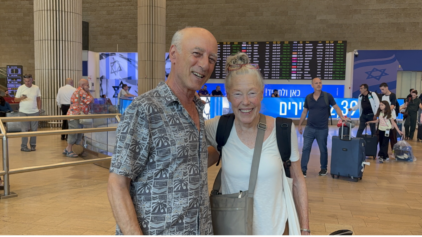
Andre Burner
Standing on opposite sides of the line
My maternal grandfather, Sgt. James R. Mansfield, was a second-generation Irish immigrant whose family hailed from Tipperary. Filled with patriotic duty, Jim enlisted in the U.S. Army in 1918 and was among the first doughboys shipped over to France with the American Expeditionary Forces. He served as a medical professional in the 79th Infantry Division — a unit heavily engaged in some of the most brutal fighting of the war.

James Mansfield in France, 1918, wearing his gas mask (right)
Meanwhile, my paternal grandfather, Jean Burner, was living an entirely different reality in the Meuse region of France. Because of the complex history of Alsace-Lorraine — a region that constantly shifted between French and German administration — my grandfather and his family were caught in the crosshairs of identity.
“One time they were German, one time they were French,” I remember hearing.

Jean Burner, Andre’s paternal grandfather who fought in WWI in the German army
Because the region was under German control at the time, Jean was impressed—forcibly conscripted—into the Imperial German Army. He was a Frenchman at heart, forced to wear the uniform of Germany.
In the autumn of 1918, both of my grandfathers fought along the fronts in the Alsace and Meuse-Argonne sectors. As it turns out, during the ferocious Battle of Montfaucon, they were positioned within a single mile of each other. One was saving lives in an American uniform; the other was fighting for his survival in a German one.
I’m still not sure which one of them was the worse shot, but I am profoundly glad they both missed. If they hadn’t, I wouldn’t be here to tell this story today.
The distinguished service cross and a great escape
My grandfather Jim Mansfield survived the war as a decorated hero. He was awarded the Distinguished Service Cross (DSC), the United States’ second-highest military decoration for valor, for his extraordinary bravery in aiding wounded U.S. soldiers under heavy fire.

James R. Mansfield proudly wearing his Distinguished Service Cross medal
Looking at his old World War I photograph, with his overseas cap tilted just right and that beautiful cross-shaped medal pinned to his high-collared tunic, I feel an overwhelming sense of pride.
For my French grandfather, Jean, the aftermath of the war brought only bitterness. The region was exhausted by the constant tug-of-war between French and German cultural dominance. Jean was tired of the endless stories of conflict involving his grandfathers and great-grandfathers.
Seeing the lingering animosity after Germany surrendered, Jean knew deep down that another war was coming. He realized it was just a matter of time. Seeking a fresh start, he chose to leave Europe behind, immigrating through Ellis Island in 1920.
Jean Burner arrived on board the ship La Touraine on February 7, 1920, as recorded line 17 in the ‘Ellis Island and Other New York Passenger Lists, 1820–1957’ collection.

Immigration record of Jean Burner arriving in the United States
Sadly, his predictions came true. Decades later during WWII, his own brothers back in Europe were forced into the German army. One tragically died in Russia in 1945, and another was interned in a French POW camp.
From adversaries to best friends
After arriving in the United States, Jean settled in Boston and became a master chef, working in some of the city’s largest hotels. He threw himself into the American Dream, emphasizing education and success for his children.

Jean became a master chef
However, the shadow of the war was long. In Boston, my father and uncle were strictly instructed never to speak German outside the house due to the lingering anti-German sentiment from World War I. Sadly, because they stopped speaking it, I never learned the languages properly, and today I find myself squinting at old French and German family documents, wishing I had pursued language studies.
Meanwhile, Jim Mansfield returned home to become a city clerk in Northampton, Massachusetts, later working for the state’s employment services.
Eventually, the universe pulled these two former battlefield adversaries into the exact same circles. Their children met and began dating. When Jean and Jim finally met as future in-laws, they began comparing notes about their time in France. They were stunned to discover that they had been less than a mile apart in the mud of Montfaucon.
Instead of holding onto past hatred, the two former enemies became the best of friends.
What being American means to me
A few years ago, I visited the World War I Museum in Kansas City. I happened to be there during the 100th anniversary of the Armistice. At the exact moment the war had ended a century prior, all the church bells began to ring. Standing there, listening to those bells, the emotional significance of what my grandfathers endured hit me like a wave.
My family went on to plant deep roots in America. My ancestors placed a massive emphasis on education, a tradition that continues today, as most of my family holds at least a college degree, working in education, medicine, or government. My own father went on to become a military veteran of World War II.
When I think about my Irish and French Alsatian heritage, I feel a strong desire to travel to those ancestral homes in Ireland and France to better understand the cultures they left behind.
But most of all, this journey has taught me what it truly means to be American. To me, it means having a profound respect for all those who served to preserve our freedom — and a deep gratitude for the American melting pot that could take two opposing soldiers from a battlefield in France and turn them into family.
Many thanks to MyHeritage user Andre Burner for sharing his grandfathers’ beautiful story with us. Explore more American Family Stories and discover how ordinary families experienced extraordinary moments in U.S. history on MyHeritage’s America 250 hub.