My Father’s Surname Goes Back 400 Years. For His 85th Birthday, We Followed It All the Way to France

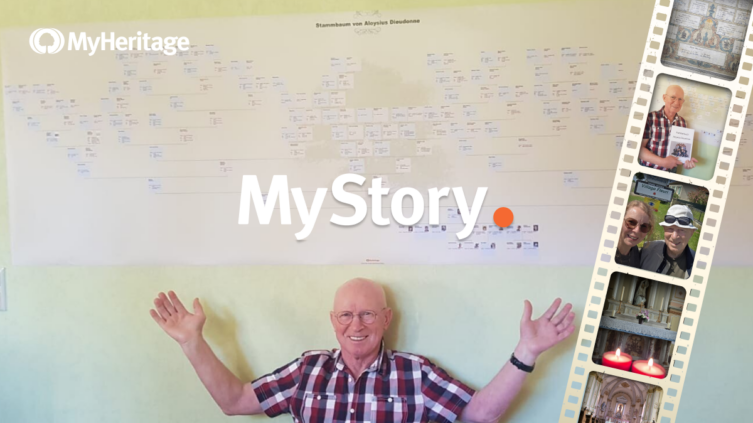
Hello, I am Anne Gebel. The story I want to tell is actually that of my father, Aloysius Dieudonne — and it begins with his name. Translated, Dieudonné means “given by God.” My father turns 85 this year, and this name means everything to him. I have now traced it back over 400 years, to the year 1590. But the more I found, the clearer it became to me: this journey doesn’t belong to me. It belongs to him. And at some point, taking that journey on the screen was no longer enough. I wanted to take it together with him — to the place where our family began.
Who my father is
My father was born in 1941 in our home village of Dörsdorf, as the youngest of 11 children. He never met his own father, who died in May 1941, just a few months before my father was born in October. Perhaps that is one of the reasons why the question of where he comes from has affected him so deeply throughout his life.
His has been a life in the service of others. He first trained as a carpenter, then retrained — first as a masse therapist and pool attendant, and later as a sports physiotherapist. He was self-employed for 26 years and served as the trainer for the Rot-Weiß Hasborn major league team for almost 40 years. “Rot-Weiß is my soul,” he says, and you can tell: there’s no exaggeration there. To this day — at almost 85 — he leads the senior gymnastics in Dörsdorf, which he founded himself in 1987.
And then there is the Red Cross. He has been a member since 1956 — this year makes it 70 years. He started at 14 as a collection agent, became treasurer, founded the local Youth Red Cross group in 1960, and was its first leader — back then with six girls, and by 1972 there were 33 young people. Later, he was the readiness and operations manager and also the first chairman of the DRK local association in Dörsdorf for 24 years. Today, he is the honorary chairman. For his service in public life, he received the medal of honor from the city of Lebach. “All with joy,” is all he says about it.
Faith carries him through all of this. He is Roman Catholic, and God is important to him. When you ask him about the different spellings of his name, he waves it off with a smile: “Whether we are ‘God gives’ or ‘gift of God’ — we are children of God.”
How it all began
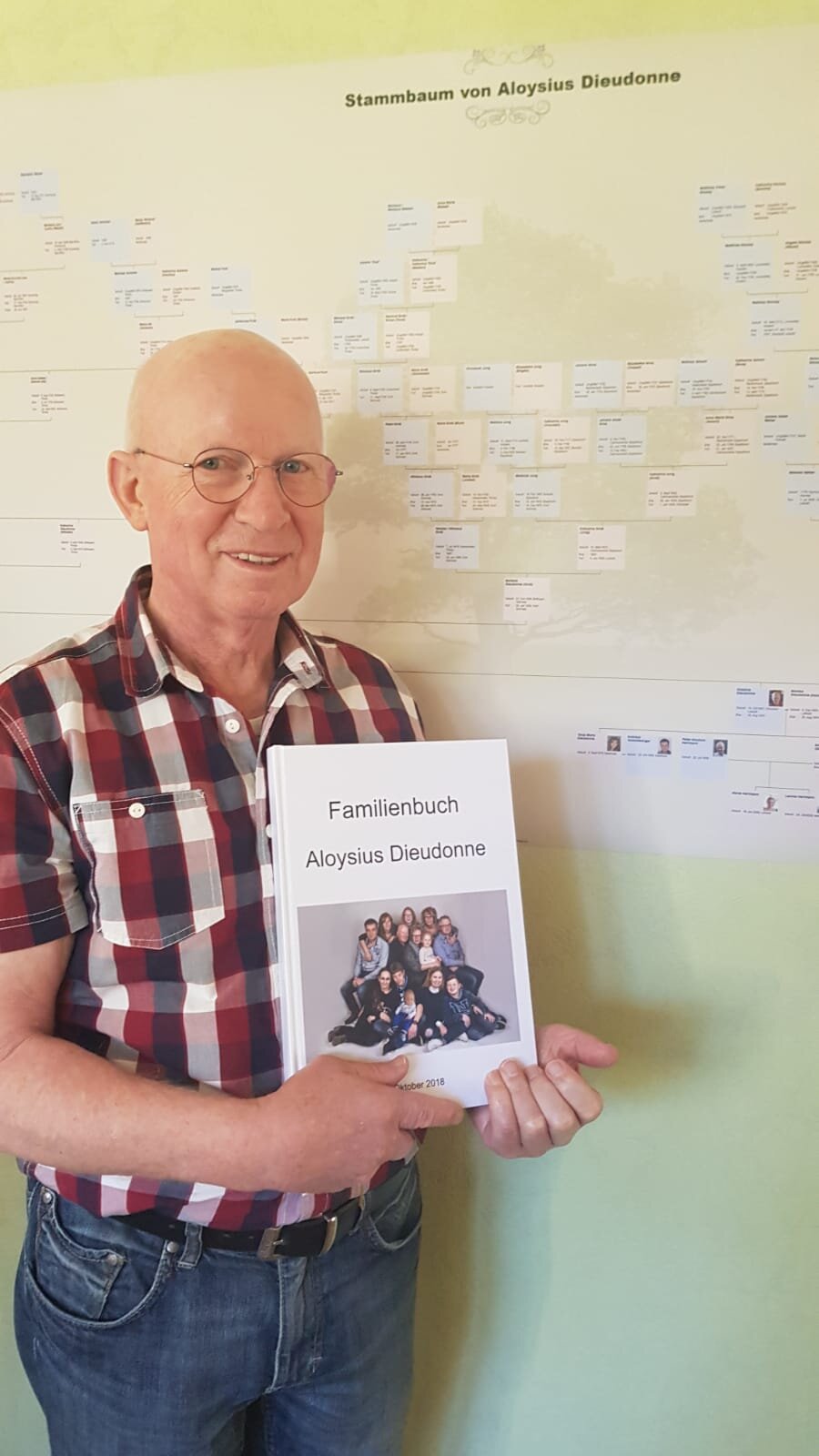
Our search for traces began with a DNA test. Around 2015, MyHeritage was present everywhere, and we were curious: where do we actually come from? Little by little, almost the whole family here at home took a test. When the results arrived — this percent from here, that percent from there — I was immediately hooked.
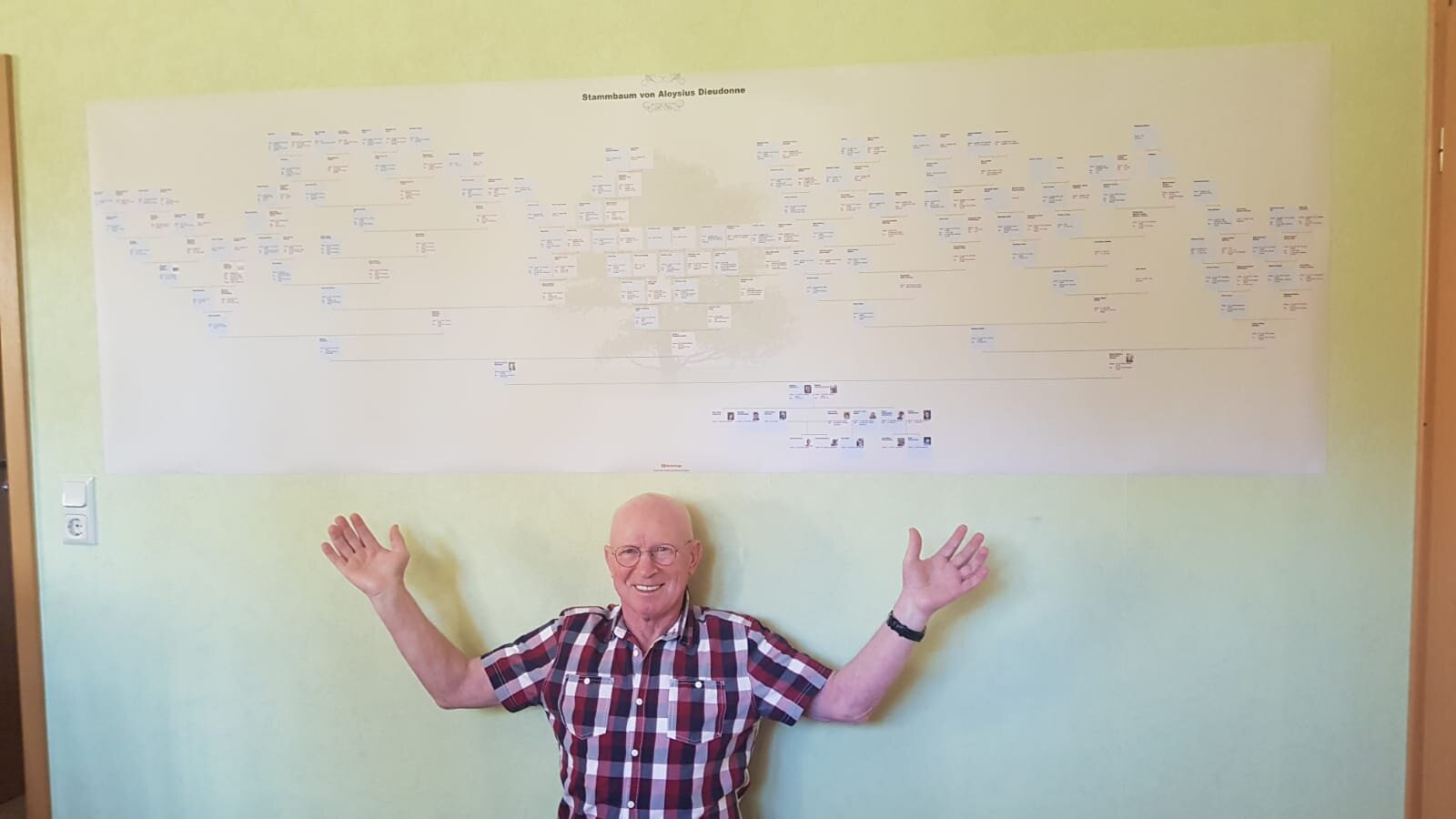
Curiosity turned into a passion. I became a Premium member, and especially during the Corona period, I sat at the family tree day and night. I scoured the old local family books and church records, traced each line individually, and always found new pieces of the puzzle through the connections on MyHeritage. Once you’re in it, it’s like an addiction. Today, there are almost 8,900 people in our family tree.
A name that migrated with history
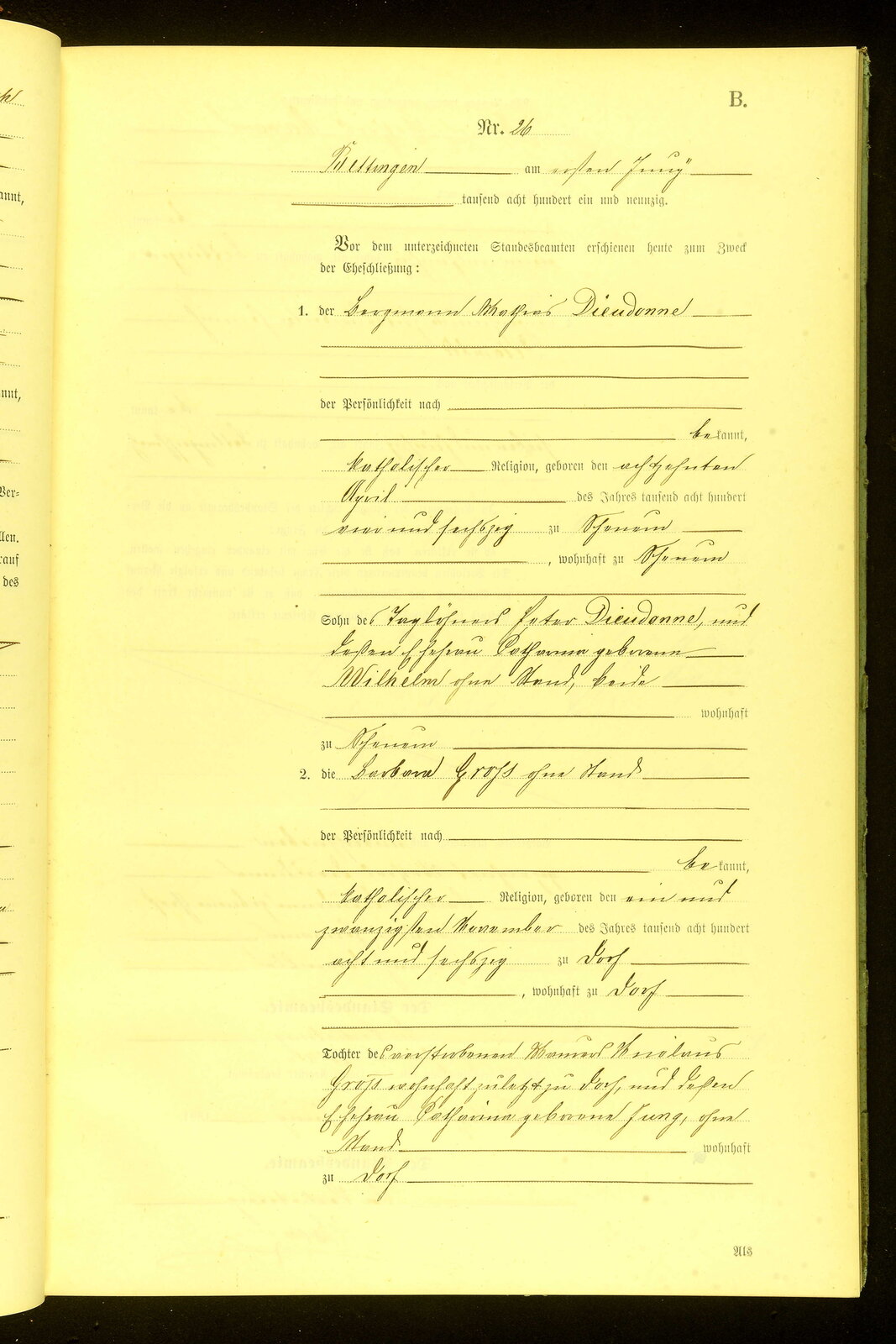
The further back I went, the more fascinating the name itself became. Over the centuries, it was sometimes written with an accent, sometimes without — Dieudonné or Dieudonne. My father himself writes it without an accent. He explained to me that the accent on the “é” came and went, depending on whether our region belonged to France or Germany at the time: “When the war was lost and we were French, the accent was there. And when we were German, it was gone.”
When he needed his identity card as a young man, he was unceremoniously told at the office that they were simply leaving the accent off now — after 17 years, his name was suddenly different. Incidentally, our ancestors were already settled in Saarland in 1735; nobody in the family speaks French today. What remains is the dialect — and the name.
A root we hadn’t expected
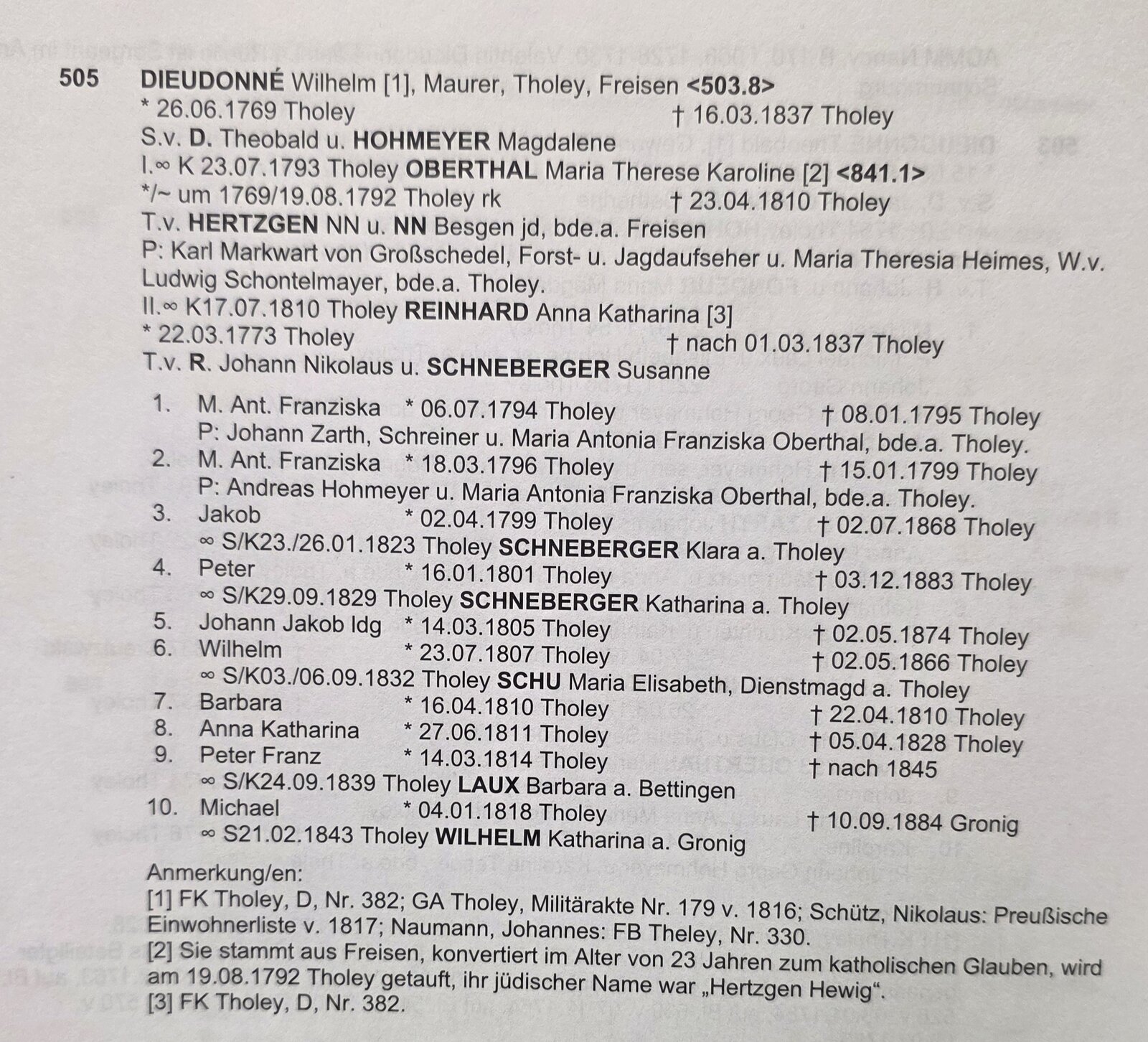
We hadn’t expected everything we found. In our line, we came across Maria Theresia Karoline Oberthal, born in 1793 in Freisen — a Jewish woman who later converted to Catholicism and married into the Dieudonné family. This part of our origin is also reflected in the DNA results, with a small Ashkenazi Jewish percentage. It is a trail I would still like to follow, because little can be found about her so far. But it is exactly such discoveries that show how many different paths converge in a single family name.
The idea for the gift
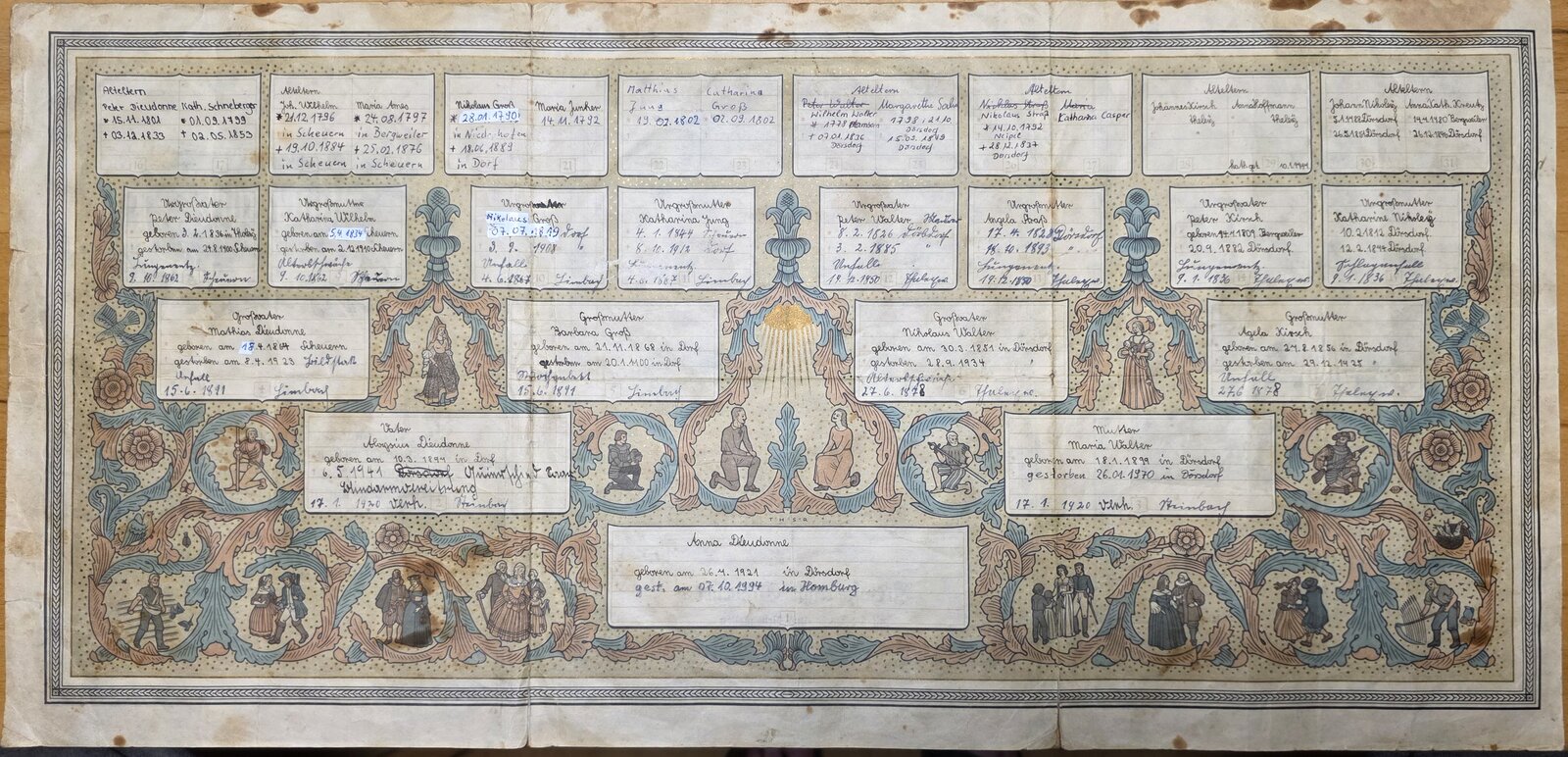
Because I know how much his name and his origins mean to my father, I wanted to give him something very special for his 85th birthday — not just another excursion, but something that belongs to him alone. While sitting at the family tree, the thought came to me: what if I took him on a day trip to the exact places where his ancestors lived?
I mapped out the route myself and recorded everything in a letter. At that time, our oldest known ancestor was Jean Dieudonné, born in 1625. Just a few days before the trip, during a final search, I discovered another one: Gilles Dieudonné, born around 1590 in Carvin — about 500 km away. Our trail suddenly reached back even further than I had thought.
A journey through time
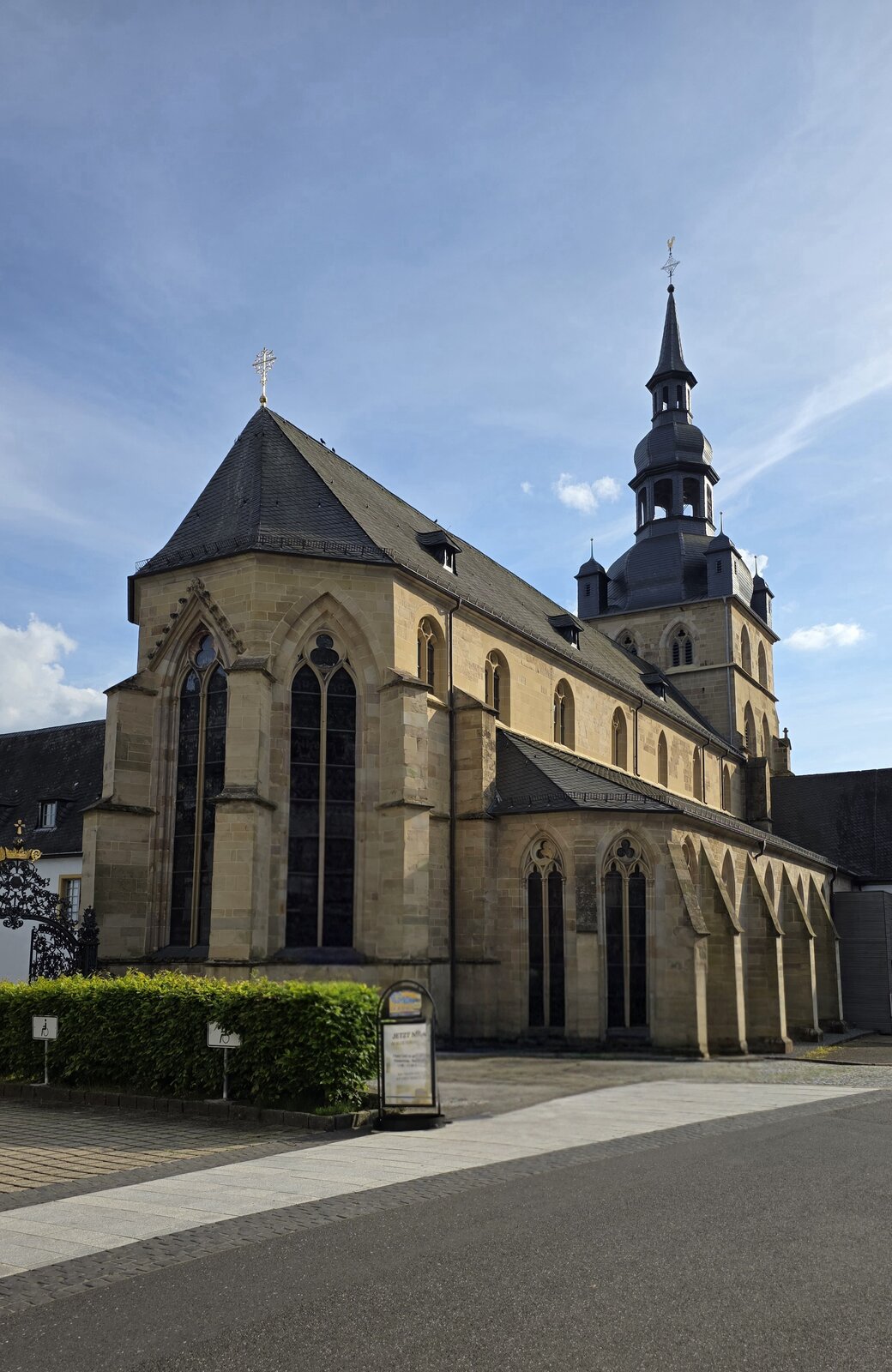
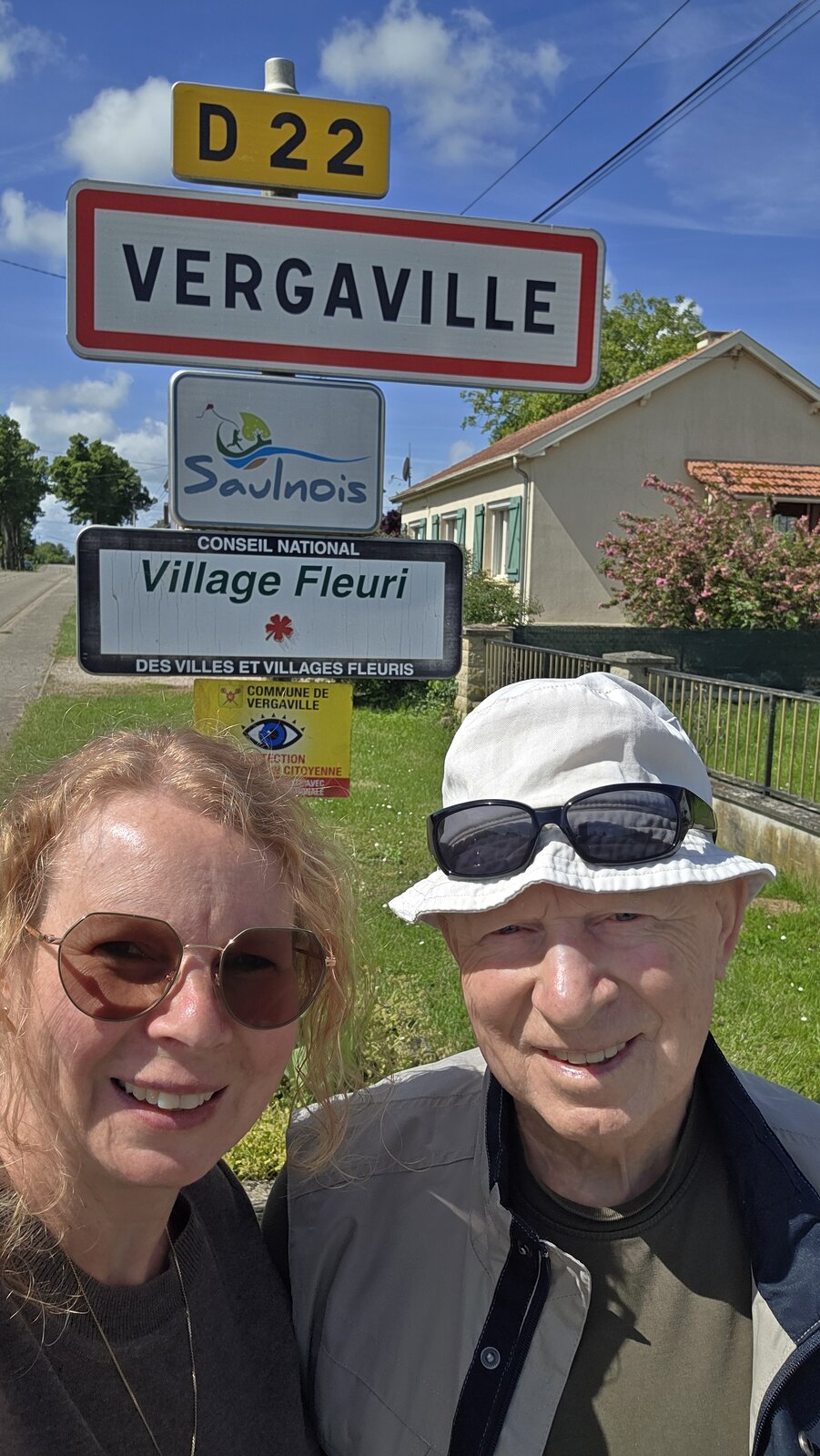
One day in spring, we set off from Dörsdorf towards Lorraine and back to Saarland: Vergaville, Albestroff, Bettviller, Tholey, Scheuern, Dorf. Stop by stop, names and dates became real places: church towers, paths, cemeteries.
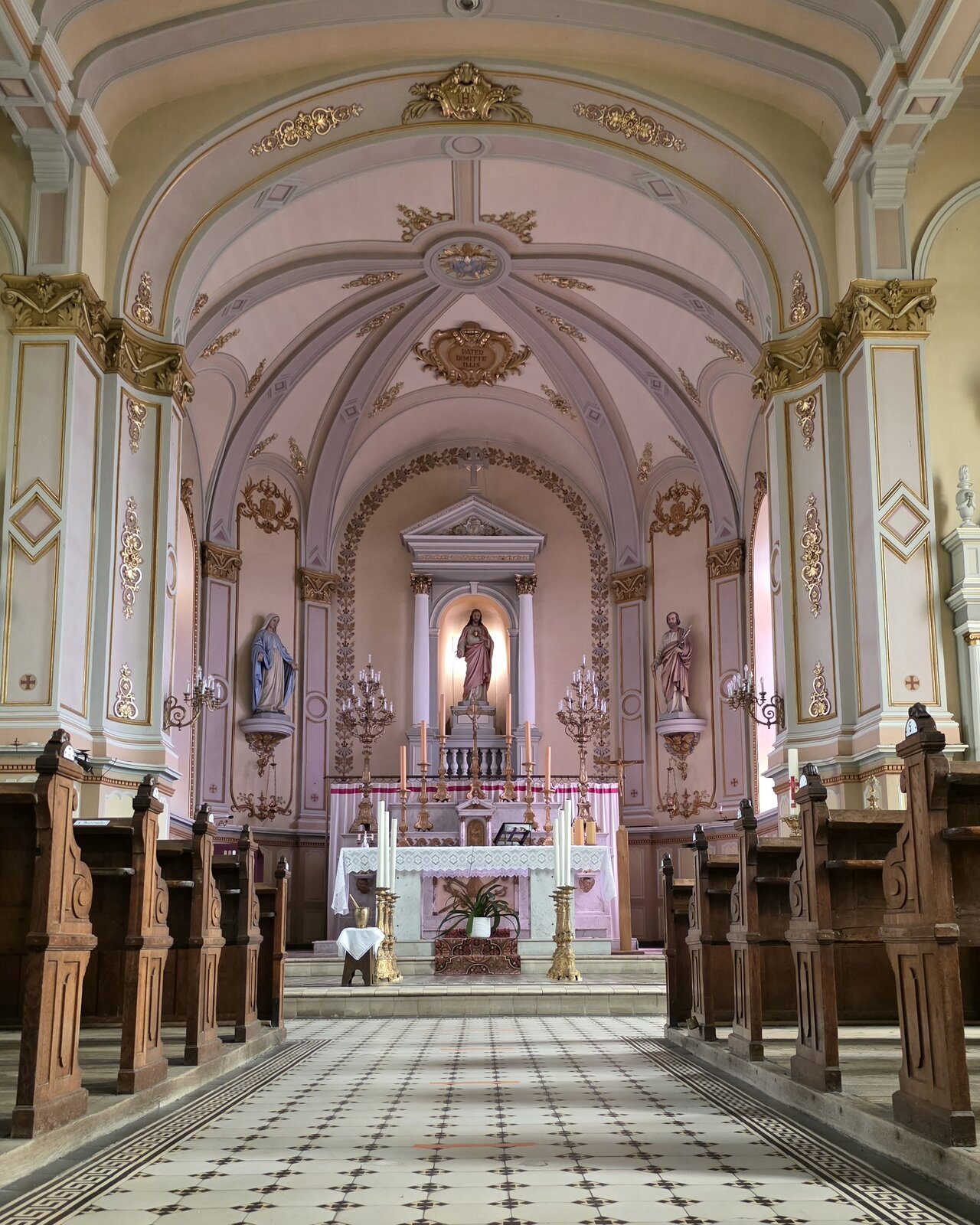
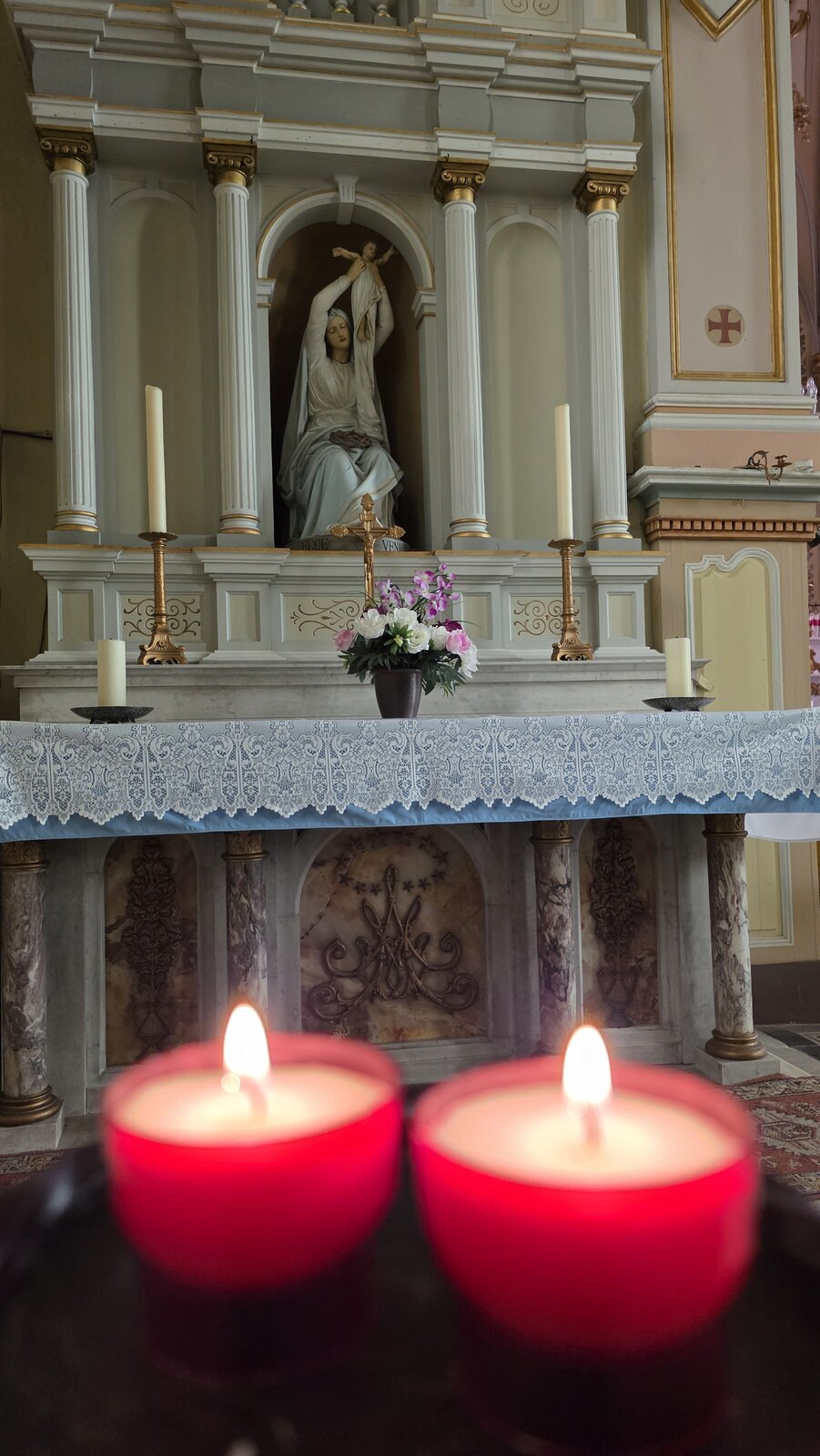
We stopped in every old church. Many of these buildings have been standing since before our ancestors lived there. “They were definitely in there too,” my father said. So we lit a candle in each one, in memory of the deceased and for the well-being of the living. For him, a man of faith, this was more than a gesture — it was a quiet sign that we belong together.
There were also lighthearted moments. Somewhere in France, the police suddenly pulled up next to us with flashing blue lights — two Saarlanders parked in front of a town sign made the officers curious. We couldn’t speak French, and they couldn’t speak German. We communicated using our hands, feet, and Google Translate. In the end, one of the police officers even took a picture of us and shot a short video, with the police car and its flashing lights in the background. So much for ancestor research in the old homeland.
The moment that made it all worthwhile
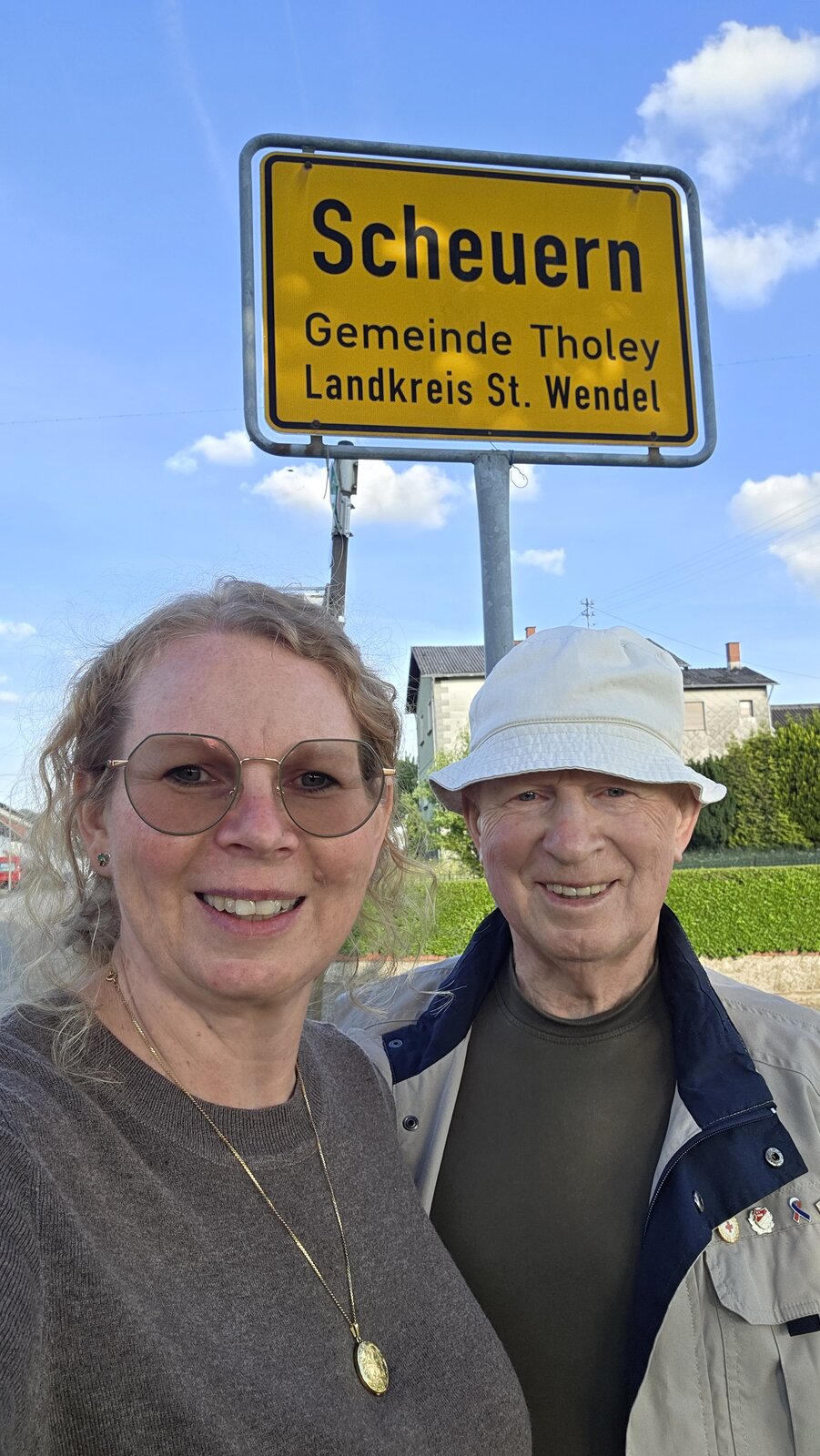
My father is actually a bit of a tough guy. But on this day, the subject really softened him. Even when he read my letter kicking off the journey, he was blown away. We ended the day with a dinner together in our home village of Dörsdorf — at the “Zur Starz” inn, which has been around since about 1870 and where his parents had previously been guests. When we came home afterwards, he hugged me tightly and simply said:
“Thank you for the beautiful day.”
For me, everything is captured in that. A man who never had the chance to meet his own father suddenly stood in the places where his ancestors lived, loved, and repeatedly started anew. The names and dates from the family tree were no longer dry facts, but people with stories. And he was one of them.
And the search continues
I have long since stopped doing this research just for us. Through a small DNA Match of only 1.9%, I once came across a distant relative whose family didn’t even know where their family tree began — I was able to present her with a complete tree. Such moments are among the most beautiful for me.
Through my father’s large family, the name Dieudonné lives on. And my search is not over: there are still open trails, older spellings, and clues I want to follow up on. Perhaps one day someone from France will even get in touch, having rediscovered our ancestors in their own list.
If I have learned one thing, it is this: a family tree is never just a collection of dates. It is a way to show the people you love where they come from — and thereby give them something that lasts. I was able to give my father exactly that for his 85th birthday: 400 years of family, in a single day.
Many thanks to Anne and her father Aloysius for sharing this touching story with us. If you have also made a special discovery with MyHeritage, we would love to hear about it. Feel free to email your story to us at stories@myheritage.com.