
Hi Shyam,
You can see our collections from India below:
In addition, searching through the MyHeritage Family Tree collection will bring you results from India.
Best Regards,
Esther / MyHeritage Team


MyHeritage’s SuperSearch™ offers a treasure trove of historical records from around the world to explore. We currently have over 7 billion historical records, which include MyHeritage family trees, public photos, census records, birth, marriage and death records, family history books and more. We’re constantly adding new historical content to SuperSearch from around the globe, with 1 million historical records and 2 million family tree profiles added on average every day.
Here’s an update on record collections that we’ve recently added or updated:
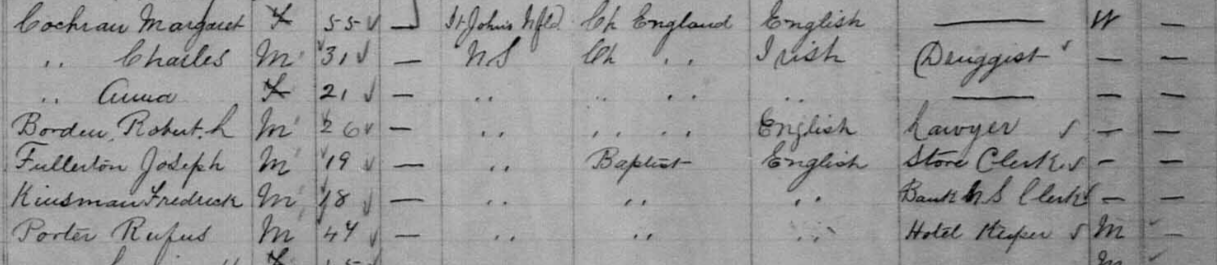
New: 1871 and 1881 Canada Census
We’ve just added the 1871 and 1881 Canada Censuses, totaling over 7 million records.
The 1871 census of Canada was begun on April 2, 1871, and enumerated nearly 3.5 million people. Information recorded in the census includes name, gender, age at last birthday, birth country or province, origin, marital status, and religion.
The 1881 census was begun on 4 March 1881. Information recorded in the census includes name, gender, age at last birthday, birth country or province, marital status, and religion. Additional questions recorded information regarding occupation, education, and infirmities. Forms were printed with both English and French column headings; answers were recorded in the locally-spoken language. The census images are from Library and Archives Canada.
The following is a Census records for Sir Robert Laird Borden, from the 1881 Canada Census. Sir Borden (1854–1937) was a Canadian lawyer and politician from Nova Scotia, and he served as the eighth Prime Minister of Canada from 1911-1920.
We’ve added the 1890, 1901, 1906, 1911, 1916, 1921, and 1925 Denmark Censuses to MyHeritage SuperSearch. These Danish censuses are a valuable collection of historical information for anyone whose families originated in the region. They cover Denmark, as well as Greenland and the Faroe Islands. The censuses are provided in partnership with the Danish National Archives (Rigsarkivet).
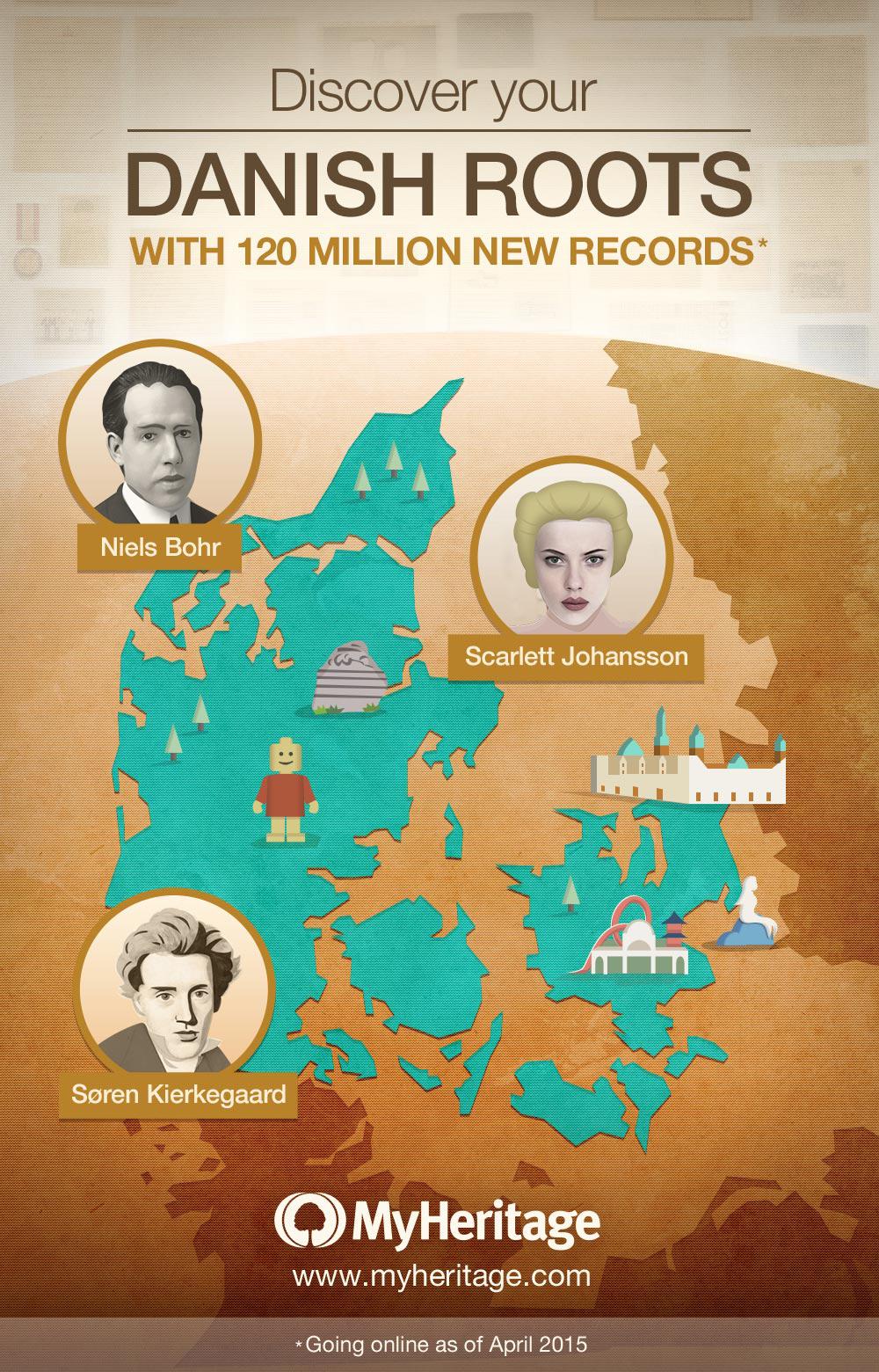
All the censuses include names, residences, gender, birth date, marital status, position in the family, and profession. The 1911, 1921, and 1925 censuses also include birthplace. The censuses of 1890, 1901, 1911 and 1921 censuses also include religious affiliation.
In the early 20th-century, Denmark was still a young industrial country. The population was mainly divided into two categories: Workers and farmers. In large cities such as Copenhagen and Aarhus, working-class and lower middle-class people often lived crammed into tiny apartments with no showers, no toilets and often no running water. They had access to outhouses in the yard. The middle-class and upper-middle-class lived in better apartments and houses, most often with access to those amenities. While men usually worked in the docks or factories, most mothers stayed at home to look after the children.
In the countryside, being a farming family meant that the whole household worked on the farm, working the fields and taking care of the cattle. Depending on their wealth, farmers may have had workers to assist the family. Children were excused from school to work on the farm. Some days it meant getting up at sunrise to work and not coming back from the fields until dinner time — fathers, children, and workers alike. Women usually worked at home cooking, cleaning, feeding the poultry and other lighter chores.
Here are some interesting examples of people who, during this time in Denmark, were found by searching the collections on SuperSearch:
The following record from the 1925 Denmark Census, shows Niels Bohr’s household. A prominent Danish physicist, Niels Bohr received the 1922 Nobel Prize in Physics for his contributions to understanding atomic structure and quantum theory. He lived in Blegdamsvej, København, Denmark, at the time of the census, with his wife Margrethe and five sons.
 Johannes V. Jensen, the acclaimed Danish author who received the 1944 Nobel Prize in Literature, is shown in the 1911 Denmark Census. He and his family were living in Jacobys Allé, København, Denmark.

Stay tuned for even more historical records from Scandinavia!
The Chronicling American collection, totaling 10.1 million historic American newspaper pages, is a fantastic family history resource and a window into American history in the 19th- early-20th centuries. The years covered varies by newspaper, but the overall collection dates from 1836 to 1922.
Chronicling America is produced by the National Digital Newspaper Program (NDNP) in partnership with the National Endowment for the Humanities (NEH) and the Library of Congress (LOC). The collection includes a significant number of newspapers from such cities as Washington, D.C., New York City, San Francisco, Los Angeles, and Phoenix. These pages offer a fascinating entry into life and world events covered by the American press.
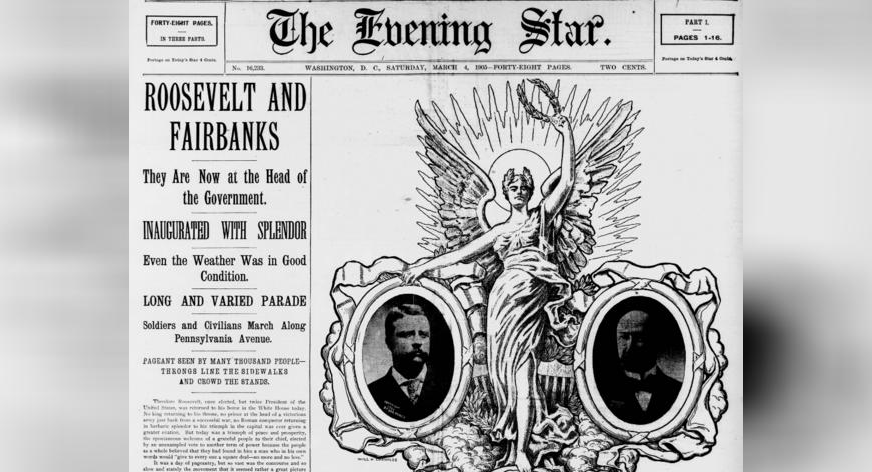
The following example from the Historic American Newspaper collection describes Teddy Roosevelt’s first inaugural address in 1905, after his landslide victory in 1904. Roosevelt’s speech can be seen as an introduction to the coming century. He declared that the United States had become a global power, and must be treated by others and act onto others as one:
My fellow-citizens, no people on earth have more cause to be thankful than ours, and this is said reverently, in no spirit of boastfulness in our own strength, but with gratitude to the Giver of Good who has blessed us with the conditions which have enabled us to achieve so large a measure of well-being and of happiness.

[The Evening Star, Washington D.C., 4 March 1905. MyHeritage SuperSearch™ Chronicling America Collection]
This clip from the collection is from The Washington Times, c1918. “Daylight will last an hour longer, which can be used for tennis or other sports,” suggests the article. It describes “Fast Time” – as Daylight Savings Time was then called – after it was first introduced by President Woodrow Wilson in the Standard Time Act and a day before Daylight Saving Time went into effect for the first time in the US

[The Washington Times. (Washington D.C.), 30 March 1918. MyHeritage SuperSearch™ Chronicling America Collection]
Update: 1911 England & Wales Census
The 1911 England and Wales Census has been available on MyHeritage since March 2016. Today we’re happy to announce all census records feature high-quality scans of the original census forms. The 1911 census forms were filled in by the heads of household, so if you find your family in this Census, you will have the added value of seeing your ancestor’s original handwriting!
This was the original census form for George Orwell’s (Eric Blair) household when he was only seven years old, filled in by his mother, Ida:
We’ve just added 1.5 million records to our BillionGraves collection and updated 1.2 million records with new information. BillionGraves is a service dedicated to the preservation of valuable records found in cemeteries throughout the world. A special mobile app is used to by volunteers to capture images of headstones with their GPS locations so users worldwide can access those records anywhere. BillionGraves is a partner of MyHeritage.
All of this newly digitized and updated content is already available for searching in SuperSearch, our global search engine for historical records. Record Matching technology will be unleashed on these records to automatically find relevant historical records for people in your tree.
We hope that you enjoy searching through these collections and gain new insights into your family history.




Being adopted I have no family history. Has any of your DNA results made connections for this senerio?
Shyam Kumar
November 16, 2016
What Historical records for India are available? and
how and by whom can these records be accessed?